
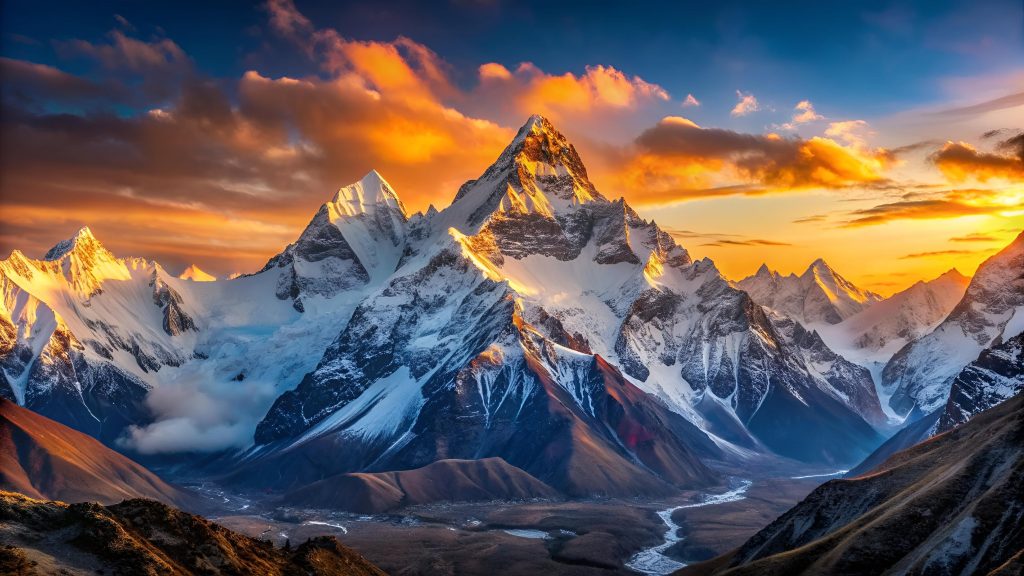
Mount Everest, known as Sagarmatha in Nepal and Chomolungma in Tibet, is the pinnacle of natural wonder and human ambition. Standing tall at 8,848 meters (29,029 feet), it is the highest mountain on Earth and a dream destination for adventurers, climbers, and nature enthusiasts. This majestic peak, nestled in the heart of the Himalayas, has captured the imaginations of people around the world. Let’s embark on a journey to explore the allure, challenges, and triumphs associated with Mount Everest.
A Glimpse into History
The quest to conquer Mount Everest began in the early 20th century, with several expeditions attempting to reach its summit. It was in 1953 that Sir Edmund Hillary from New Zealand and Tenzing Norgay, a Sherpa of Nepal, made history as the first climbers to successfully reach the summit. Their remarkable achievement set the stage for countless others to follow in their footsteps, each drawn by the challenge and the glory of standing atop the world’s highest peak.
The Ultimate Climbing Challenge
Climbing Mount Everest is the ultimate test of physical and mental endurance. The journey to the summit is fraught with challenges, including extreme weather conditions, high altitudes, and treacherous terrain. The trek to Everest Base Camp itself is a strenuous adventure, taking climbers through beautiful yet demanding landscapes. Acclimatization is crucial, as the thin air at high altitudes can lead to altitude sickness, a serious and potentially fatal condition.
The Route to the Summit
There are two main routes to the summit of Everest: the South Col route from Nepal and the North Col route from Tibet. The South Col route, which Sir Edmund Hillary and Tenzing Norgay followed, is the more popular and frequently used path. This route takes climbers through the Khumbu Icefall, a dangerous and constantly shifting glacier, and up to Camp IV, the final camp before the summit push. The last stretch, known as the “Death Zone” above 8,000 meters, is where climbers face their greatest physical and psychological challenges.
Sherpas: The Unsung Heroes
The Sherpa people are the unsung heroes of Everest expeditions. Their exceptional mountaineering skills, local knowledge, and physical endurance are invaluable to climbers. Sherpas play a critical role in setting up camps, carrying supplies, and guiding climbers through the perilous routes. Their contributions have been instrumental in the success of countless Everest summits. The relationship between climbers and Sherpas is one of mutual respect and reliance, with many climbers acknowledging that their achievements would not be possible without the support of these remarkable individuals.
The Beauty and the Danger
Mount Everest’s beauty is awe-inspiring, with its towering peaks, vast glaciers, and panoramic vistas. The journey to the summit offers climbers breathtaking views of the Himalayas, making the grueling effort worthwhile. However, Everest’s allure is matched by its dangers. The mountain has claimed many lives, with climbers facing risks such as avalanches, crevasses, and sudden weather changes. The “Death Zone” is particularly hazardous, as the lack of oxygen and extreme conditions push the human body to its limits.
Environmental Concerns
In recent years, Mount Everest has faced significant environmental challenges. The increasing number of climbers has led to issues such as overcrowding, waste management, and environmental degradation. Efforts are being made to address these concerns, including stricter regulations, clean-up initiatives, and sustainable practices. Preserving the pristine beauty of Everest while ensuring the safety and well-being of climbers is a delicate balance that requires ongoing attention and collaboration.
The Legacy of Everest
Mount Everest continues to inspire adventurers and dreamers around the world. It stands as a symbol of human determination, resilience, and the unyielding spirit of exploration. For those who have summited, the experience is a profound and life-changing achievement. For others, it serves as a reminder of the extraordinary beauty and power of nature. The legacy of Everest is one of awe and respect, a testament to the enduring allure of the world’s highest peak.
Conclusion
Mount Everest is more than just a mountain; it is a beacon of adventure and a testament to the human spirit. Its towering presence, coupled with the stories of triumph and tragedy, creates a narrative that transcends borders and cultures. Whether you aspire to climb its lofty heights or simply marvel at its grandeur from afar, Everest invites us all to dream big and reach for the skies. So, as you contemplate your next adventure, let the allure of Mount Everest inspire you to push beyond your limits and explore the wonders of our incredible planet.
37 thoughts on “Conquering Mount Everest: The Ultimate Adventure”
Pingback: viagra pills online
Pingback: revatio max dose
Pingback: dutasteride tamsulosina precio
Pingback: can i use semaglutide for weight loss
Pingback: semaglutide compresse amazon
Pingback: semaglutide bijwerkingen ogen
Pingback: finpecia vs propecia
Pingback: semaglutida tirzepatida ou liraglutida
Pingback: semaglutid naturligt
Pingback: can man use doxycycline
Pingback: flagyl (benzoyl metronidazole) uses
Pingback: generic cialis pill
Pingback: bupropion used for adhd
Pingback: oral minoxidil infertility
Pingback: toradol migraine guide
Pingback: ivermectin safety
Pingback: ivermectin slow distribution
Pingback: minoxidil clinical research
Pingback: minoxidil mechanism of action
Pingback: minoxidil men’s usage overview
Pingback: minoxidil duration clinical overview
Pingback: minoxidil pk absorption
Pingback: minoxidil women’s 12‑month results
Pingback: avanafil contraindication guidance
Pingback: avanafil mechanism medical notes
Pingback: avanafil online safety essentials
Pingback: how PDE5 inhibitors function
Pingback: onset and duration metrics
Pingback: vardenafil vs sildenafil
Pingback: alli contraindications
Pingback: orlistat food considerations
Pingback: online drug safety guidelines
Pingback: orlistat side effect evidence
Pingback: augmentin antibiotic reference
Pingback: augmentin vs amoxicillin drawbacks
Pingback: penicillin allergy symptom patterns
Pingback: amoxicillin stomach upset